Buy in bulk and save
Discounts apply automatically at checkout and scale with your order. You can even mix and match different courses — HACCP and food hygiene — across your team, with the discount applied to your entire basket.
Understand and apply HACCP — the internationally recognised food safety system — online, self-paced and certified the moment you pass.
The HACCP Level 2 Course is an online food safety course that teaches you how to identify, manage and control food safety hazards using HACCP — the internationally recognised food safety management system.
HACCP stands for Hazard Analysis and Critical Control Point. Rather than relying on testing the finished product, it’s a proactive system that prevents hazards at the critical stages throughout food production and the supply chain. This course takes you through the core principles of HACCP, from key terminology right through to implementing the full system in a real food business.
It’s suitable for anyone working in or supervising food production — from operatives and food handlers to QA staff, supervisors and managers — across catering, hospitality, food manufacturing and retail. Studied entirely online and at your own pace on any device, you’ll receive an instant digital certificate the moment you pass, with a printed copy dispatched the next working day.
HACCP or food hygiene? A food hygiene course covers safe food handling in general; this course focuses specifically on the HACCP system. They complement each other well — many learners pair this with the Level 2 or Level 3 Food Hygiene Certificate.
This HACCP Level 2 training covers the essential principles of hazard analysis and control, including:
By the end of the course, you’ll be able to contribute to HACCP procedures and support a robust food safety culture in your workplace.
Eight detailed modules, each building a clear understanding of HACCP, with interactive exercises and visual aids that show how HACCP applies in your own work environment. Tap a module to see what’s covered.
What’s covered
What’s covered
What’s covered
What’s covered
What’s covered
What’s covered
What’s covered
What’s covered

To complete the HACCP Level 2 Course, you’ll take a multiple-choice final exam. The pass mark is 80%, and if you’re not successful first time you can retake the exam for free, as many times as you need.
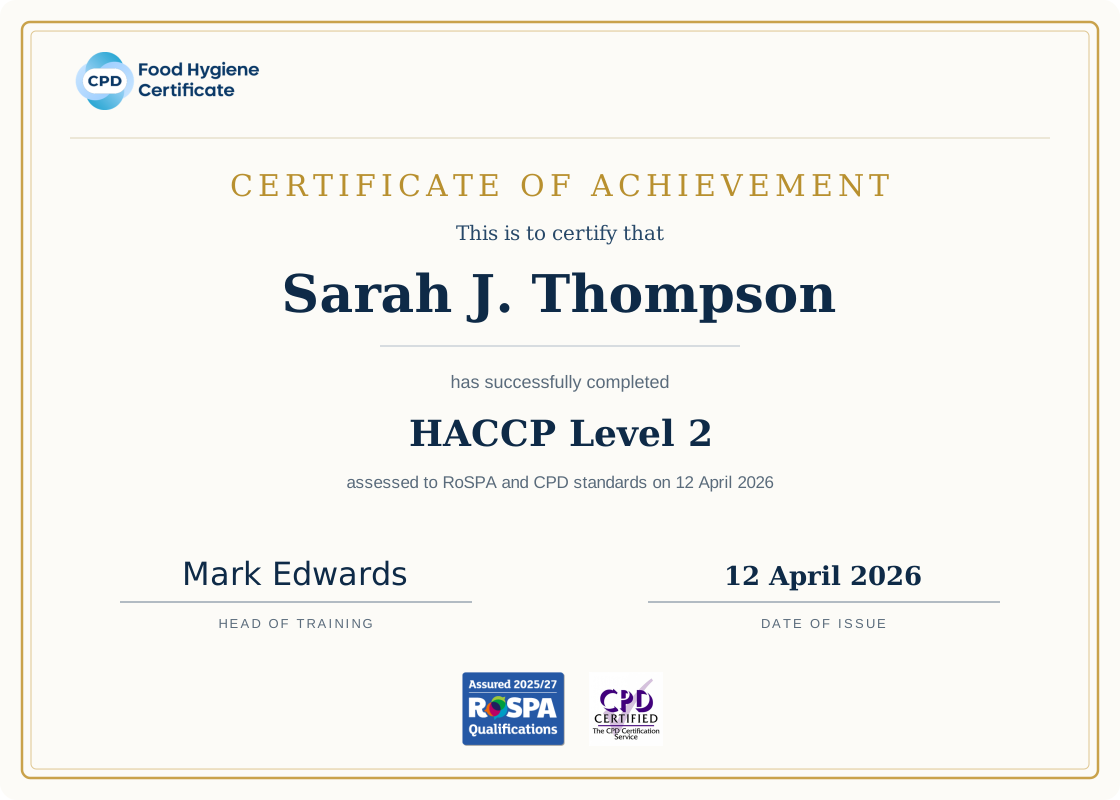
As soon as you pass, you can download your digital certificate instantly, and a printed copy is dispatched the next working day. Your certificate is CPD certified, RoSPA Qualifications Assured and Institute of Hospitality accredited, and confirms Level 2 HACCP training to standards recognised by UK food safety authorities.
There is no expiry date on the certificate. However, we recommend refreshing HACCP training every three years, or in line with your company’s own policy.
This course is for anyone involved in handling, preparing, producing or monitoring food, whether you’re contributing to HACCP procedures or supervising them. It suits a wide range of roles and sectors:
It’s also ideal for businesses looking to upskill their teams in food safety management or meet audit and inspection requirements. Whether you’re an operative, supervisor or working towards a leadership role, it builds the foundation for effective food safety.
Compliance with food safety regulations is a legal requirement for food businesses, and HACCP sits at the centre of every food safety management system. Anyone involved in handling, preparing or supervising food production benefits from understanding how it works.
By completing this course, you’ll be able to:
It builds the foundation for effective food safety leadership, whatever your role.

For employers, managers & business owners
Buy, assign and manage food hygiene training across your whole team — all from one place.
Discounts apply automatically at checkout and scale with your order. You can even mix and match different courses — HACCP and food hygiene — across your team, with the discount applied to your entire basket.
Buy the number of licences you need now and assign them whenever it suits you — there’s no rush to use them all at once. Add team members by email and they’ll receive their own login to start the course.
A simple manager dashboard shows who has started, who’s in progress and who has passed — so you can keep your team’s training on track ahead of an audit or inspection.
Download every team member’s certificate from a single account, and export a training record to evidence compliance for audits and EHO inspections. Printed certificates are dispatched as your team passes.
Pay by card for instant access, or get in touch about invoicing and purchase orders for larger team orders.

Bulk pricing & team discounts
The more licences you buy, the more you save — and discounts apply across your whole order, including mixed courses. Secure a lower rate today and use your licences whenever it suits your business.
Discounts are applied automatically at checkout based on your total quantity.
HACCP stands for Hazard Analysis and Critical Control Point — a proactive approach to food safety that prevents hazards at critical stages rather than relying on testing the finished product.
A food hygiene course covers safe food handling in general. A HACCP course focuses specifically on the HACCP management system — identifying hazards and building controls to manage them. Many people take both; this pairs well with our Level 2 or Level 3 Food Hygiene Certificate.
HACCP training isn’t always mandatory, but a HACCP-based food safety management system is a legal requirement for food businesses, and training is essential for anyone implementing or managing one. It’s often expected by EHOs.
Yes. It’s fully online and can be accessed from any device at your own pace. The final assessment must be taken on a laptop or PC.
Around 80 minutes, but it’s self-paced — complete it in one sitting or over several.
Yes. A digital certificate is issued instantly when you pass, and a printed copy is dispatched the next working day.
Yes. It’s approved by the CPD Certification Service, RoSPA and the Institute of Hospitality, and accepted by local authorities and EHOs across the UK.
Every three years is recommended, or in line with your company’s own policy.
Yes. Buy multiple licences in one order and save with automatic bulk discounts — you can also mix and match HACCP and food hygiene courses across your team.
Buy the licences you need and assign them to team members by email whenever it suits you. Each person gets their own login to complete the course.
Yes. A manager dashboard lets you see who has started, who’s in progress and who has passed, and download everyone’s certificates from one account.
Get in touch and we’ll arrange invoicing or purchase-order payment for larger team orders.
No need to rush — buy now and assign your licences whenever you’re ready.
Ready to get certified?
Instant access, learn at your own pace, and download your CPD certified, RoSPA-accredited certificate the moment you pass — with a printed copy on its way the next working day.